Streamlining Visual Workflows with the Shawl Line Gradient Icon Pack
In the lifecycle of any digital project, from the initial wireframe of a mobile application to the final polish of a corporate presentation, visual consistency is often the bridge between a concept and a professional execution. The Shawl Line Gradient Icon set serves as a specialized resource in this domain, offering a curated collection of vector graphics designed to add depth and modernity to user interfaces and print materials. Unlike standard flat icon sets, the gradient style provides a softer, more dynamic visual hierarchy, which can be crucial for guiding user attention in complex layouts.
Understanding the Asset: Beyond Simple Graphics
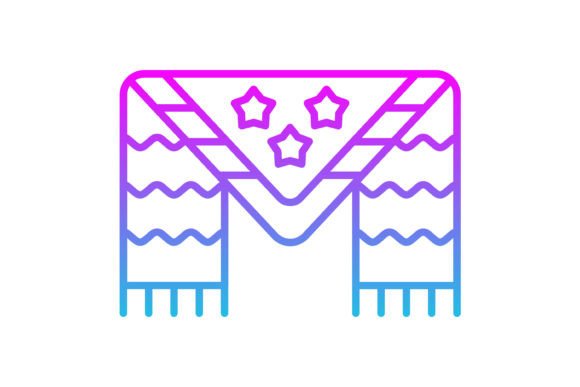
The Shawl Line Gradient Icon collection is not merely a random assortment of symbols; it is a structured toolkit containing 100 distinct vector icons. The defining characteristic of this set is the "line gradient" aesthetic—a style that maintains the clarity of line art while incorporating subtle color transitions. This approach balances minimalism with visual interest, making it suitable for contexts where pure monochrome icons might appear too stark, but fully filled icons might feel too heavy.
The utility of this asset lies in its adaptability. For a designer working on a mobile interface, the gradient line icons can help distinguish between active and inactive states without relying solely on opacity changes. For a presentation designer, these icons can break up text-heavy slides, providing visual metaphors that reinforce key points without overwhelming the content. The "Shawl" element implies a layering or wrapping quality, often seen in the fluid curves and overlapping paths within the icon designs, which adds a unique texture to the visual language of a project.
Integration into the Creative Workflow
Integrating new assets into an existing workflow requires more than just drag-and-drop functionality; it requires a strategy for implementation. The Shawl Line Gradient Icon set is designed to fit into various stages of the production process.
Early Stage: Planning and Wireframing
While wireframing is often associated with low-fidelity sketches, introducing high-quality assets early can help stakeholders visualize the final product more accurately. By placing the Shawl Line Gradient Icons into mockups during the planning phase, teams can identify potential visual clashes or layout issues before development begins. This proactive approach saves time during the refinement stage.
Mid-Stage: Development and Prototyping
For developers and UI/UX designers, the file formats included in the zip file are critical to a smooth workflow. The inclusion of SVG (Scalable Vector Graphics) is particularly valuable for web and mobile development. SVGs are code-based, lightweight, and scale infinitely without pixelation, ensuring that icons render crisply on high-resolution displays (Retina, 4K) and across different screen sizes. This format allows for easy manipulation of colors and sizes via CSS, enabling developers to adapt the icons to different themes or dark modes without needing to return to graphic design software.
Final Stage: Marketing and Presentation
As a project nears completion, the focus shifts to marketing materials and final presentations. Here, the JPG and PNG formats become essential. The PNG files, specifically noted for their transparent backgrounds, are ideal for layering icons over photographs or complex backgrounds in social media graphics or brochures. The JPG format serves well for standard document embedding where transparency is not required and file size needs to be minimized.
Technical Specifications and File Management
Effective asset management is a cornerstone of professional design work. The Shawl Line Gradient Icon pack addresses this by providing a comprehensive range of file formats within a single zip file. This organization reduces the friction of converting files and ensures that the right tool is available for the right platform.
The included formats are:
- AI (Adobe Illustrator): The master vector file. This is where the editability is highest. Users can access the original layers, adjust the gradient colors, modify the stroke weights, and reshape the paths to fit custom requirements.
- EPS: A legacy vector format that maintains compatibility with a wide range of vector editing software beyond Adobe products, such as CorelDraw or Affinity Designer.
- SVG: The standard for web implementation, ensuring scalability and fast load times.
- JPG: A rasterized format suitable for quick previews or contexts where vector editing is not possible.
- PNG (Transparent): Essential for overlaying icons on various backgrounds without the "white box" effect.
When downloading the zip file, it is advisable to create a structured directory on your local drive or cloud storage. A suggested hierarchy might be: Assets > Icons > Shawl_Line_Gradient > [Format Folder]. This prevents the common issue of assets becoming scattered across "Downloads" folders, which can lead to broken links in design files or development repositories later on.
Practical Implementation and Customization
While the icons are "ready to use," the true value of a vector asset lies in its editability. The Shawl Line Gradient Icons are designed for maximum usability, but they often require customization to match a specific brand identity.
Adjusting Gradients for Brand Consistency
Most brands have a specific color palette. To maintain consistency, open the AI or EPS file in a vector editor. Locate the gradient panel and replace the default colors with your brand’s primary and secondary hex codes. Because these are line icons, pay attention to the stroke weight. If the icons are being used in a dense interface, slightly thinning the strokes can improve legibility. Conversely, for large print formats, increasing the stroke weight ensures visibility from a distance.
Optimizing for Mobile Performance
When using the SVG versions for mobile apps, performance optimization is key. While vector files are generally small, complex gradients can sometimes increase file size. Before deploying the icons in a live environment, run the SVG files through an optimization tool (like SVGO). This removes unnecessary metadata from the file without altering the visual appearance, resulting in faster load times for the end-user.
Use Cases Across Industries
The versatility of the Shawl Line Gradient Icon set allows it to serve multiple sectors effectively.
- E-commerce: Use icons to categorize products (e.g., shipping, returns, support) in the footer or sidebar. The gradient style adds a premium feel to the shopping experience.
- Education: In e-learning platforms or educational presentations, these icons can visually represent complex concepts or steps in a process, aiding in cognitive retention.
- SaaS Dashboards: For software interfaces, the icons can be used to represent different features or data points. The line gradient style is particularly effective in "dark mode" interfaces, where the gradient can provide a subtle glow effect.
- Content Creation: Bloggers and video creators can use the PNG versions as overlays in their thumbnails or video editing timelines to highlight key topics or calls to action.
Quality Control and Scalability
One of the primary challenges in design is maintaining quality across different mediums. A logo that looks great on a business card might look terrible on a billboard if it is raster-based. The Shawl Line Gradient Icon set mitigates this risk by being 100% vector-based at its core.
However, quality control checks are still necessary. When scaling the icons up for large format printing (such as trade show banners), zoom in to 400% to check for any jagged edges or unintended artifacts in the gradient transition. Similarly, when scaling down for small UI elements (like a 16x16px favicon), ensure that the line details do not merge into an unreadable blob. In such cases, simplifying the icon (removing internal details) might be necessary, a process easily done in the AI file format.
By treating the Shawl Line Gradient Icon pack not just as a collection of images but as a functional component of your design system, you ensure a cohesive, professional, and efficient visual output. Whether you are building an app, designing a website, or preparing a keynote, these assets provide the flexibility and quality required for modern digital standards.